Teen Patti for real money: which Indian tables are worth sitting at, the full rules and how the app economy works
Teen Patti is India’s three-card poker, dealt from one 52-card deck and built on a betting structure nothing else in the lobby shares. Five operators were played through live dealer sessions, and the parallel world of standalone apps — Master, Gold, Octro and the rest — was tracked alongside them. The three things routinely confused with one another are cash-game play against other players, casual live tables run by a studio, and social-coin apps where the chips never convert to anything.
The Teen Patti questions answered here
Teen Patti · 3-card poker
India’s signature 3-card game with INR tables, sourced from Ezugi, Evolution and Pragmatic Play studios — present on 14 of our 17 operators.
Three things to settle before the first Teen Patti stake
Start by working out which version is on the screen, because the three that share the name behave nothing alike. A live studio table is you against a fixed paytable with a dealer in front of a camera. An RNG table is the same arithmetic without the stream, dealt instantly and usually from a lower floor. A cash game inside a standalone app is you against other players, where the house takes a rake and your result is decided by how the other seats play, with no published house edge standing behind the outcome.
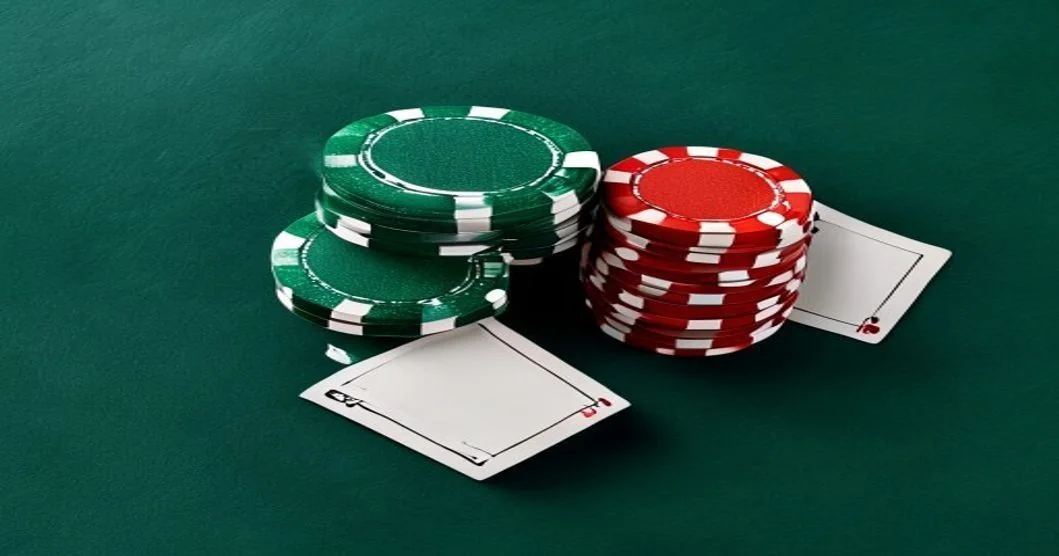
Then the numbers: the table floor, which runs from ₹30 at most offshore studios, the ante-to-stack ratio you are comfortable with, and whether the table puts any ceiling on the pot — unlimited-chaal tables escalate far faster than any slot spin. Variance here is genuinely high, and using these tables to clear a deposit match is the most expensive mistake on offer: card tables count for a tenth of turnover at the generous end of the pool and are excluded outright everywhere else. Which brands weight them how is recorded in the bonus guide. Minimum withdrawal and the hours a rupee payout actually takes belong to the payments guide. The casino guide places three-card poker beside the slots, the wheels and the crash shelf.
Best Teen Patti sites for real money

Pin-Up Slots Pick
- 2,000+ slots
- 250 free spins
- Native Andar Bahar
- Live Teen Patti

Stake Editor’s Pick
- Crypto + UPI
- 200+ IPL markets
- Instant withdrawals
- 0% deposit fees

Yolo247 Best Bonus
- UPI · Paytm
- Hindi support 24/7
- 110 IPL markets
- Hindi Andar Bahar

4rabet Biggest Pack
- Promo NASEEBBET
- Aviator + Andar Bahar
- 30+ sports
- Curacao licence

1Win
- Lucky Jet · Aviator
- Aviator bonus-eligible
- UPI & USDT
- Live cricket odds
Parimatch
- Cricket sponsorship heritage
- 30 years operating
- UPI 24-min payouts
- Aviator + Andar Bahar

Mostbet
- Aviator front and centre
- Telegram bot promos
- 16 years operational
- 8 cryptocurrencies
Three cards, one deck: how a Teen Patti hand is actually played
Hand rankings, strongest first
- Trail or trio — three cards of one rank, AAA at the top and 222 at the bottom. It lands in 0.24% of deals, roughly one hand in 425
- Pure sequence — three consecutive cards of one suit, the straight flush of the three-card game, dealt 0.22% of the time
- Sequence — three consecutive cards across mixed suits, at 3.26% the first ranking a player meets with any regularity
- Colour — three cards of one suit out of order, 4.96%, and the ranking most often overplayed at low stakes
- Pair — two cards of matching rank with any third, 16.94% of deals
- High card — everything else, which is three deals out of four, decided by the top card and then by the second
Two conventions catch newcomers. A–2–3 in one suit ranks as the strongest sequence in most rule sets, above Q–K–A, which is the reverse of what a poker player expects; and the ace counts high everywhere else, which puts an ace-led high card above a king-led one on the first comparison. Those two rules settle every contested hand, and every live Teen Patti table prints the ranking order in the interface, so nothing turns on memory.
Betting itself splits in two from the first card. A seen player looks at the three cards and pays the full chaal; a blind player pays half that and never looks, and that half-price licence lets an aggressive blind seat pressure a seen one holding a better hand. A show can only be called once two players remain, and calling it costs the current stake — the reason a weak high card released early returns more over a session than any correct read of an opponent.
Teen Patti, 3 Patti, Indian Poker: one game under three names
Teen Patti, 3 Patti and Indian Poker describe one game under three labels. The first spells the number as a Hindi word, the second as a numeral, and the third is the descriptor international studios put on the tile so a non-Indian player knows what they are looking at. Nothing underneath changes: identical rankings, identical chaal-and-blind structure, identical show. A lobby carrying all three names is carrying the same table three times.
The variant shelf is where the differences are real. AK47 turns aces, kings, fours and sevens into wild cards and roughly doubles the frequency of trails. Muflis inverts the ranking so the weakest hand takes the pot, which makes a pair a liability. 999 scores by proximity to a target and sets the ranking order aside entirely. Joker nominates a wild card at the start of each deal. Best of Four deals four cards and keeps the strongest three, lifting every average hand by about one ranking step. Teen Patti Up is the escalating-pot format where nothing comes off the table until a hand ends. Payout tables move with each of them, and strategy carried over from the standard game stops applying at the door.
The Teen Patti app economy and where the money actually sits
Outside the casino lobbies sits a Teen Patti app economy of its own, and it is large: Teen Patti Master, Teen Patti Gold — among the most downloaded Indian gaming titles of any category — King, Castle, Tycoon and Octro’s combined 3 Patti and Rummy client, each shipped as a direct Android package and each with its own player pool. They compete on table traffic, not on odds, because in a player-versus-player game an empty lobby is the only thing that makes a table unplayable.
Most of them run a social-coin model: chips are bought inside the app, play is free of any published house edge, and rupees come back out through rebate mechanisms, with no conventional cashier anywhere in the flow, all of it resting on the classification of the game as one of skill. Octro leads on raw traffic across its combined client. Master and Gold lead on dedicated cash-game volume, which is a different measure entirely — the first counts people at tables, the second counts money crossing them.
Modified builds promising unlimited chips are a separate category and the only genuinely dangerous one. They breach the terms of every app they imitate, they cannot credit a real balance because the chips they generate exist only on the handset, and the permissions they request during install reach well past anything a card game needs. A detected mod client costs the account and whatever sat in it. Install behaviour, package sizes and update mechanics across real-money clients are covered in the apps guide.
On iPhone the choice is narrower. Octro maintains an App Store listing; most of the rest never clear review, leaving the offshore operator’s mobile site as the practical route: saved as a home-screen icon from Safari, it opens the live tables without a package being installed on the phone. That route also keeps one balance across sportsbook and casino, and money never strands itself in a coin wallet that cannot be moved anywhere.
Live Teen Patti: two studios, rupee limits, and where Hindi is spoken
Live Teen Patti dealing comes from two studios only, Pragmatic Live and Evolution, and every offshore brand in the pool licenses one or both; none of them has built a dealing studio of its own. Limits sit between ₹30 and ₹5 lakh a hand, the stream arrives over a WebSocket connection that survives a mid-hand network switch, and the betting window closes after twelve to fifteen seconds. Against a standalone app the trade is clear: a fixed paytable and no other players to read, in exchange for a licensed cashier and rupee withdrawals that leave through the same route as a sports payout.
Hindi commentary is rare enough to be a deciding factor. Yolo247 runs Hindi-language Teen Patti tables from six in the evening until midnight IST, the same window in which it deals Andar Bahar in Hindi, and nothing else in the pool comes close to matching it. Pin-Up answers on depth where it cannot answer on language: three simultaneous tables drawn from both studios, which is what keeps a seat free at nine in the evening when single-table brands are queueing players out. Players who want the fastest possible turnover between hands generally end up on the crash shelf and Aviator, since a full hand at a card table takes minutes where a crash round is over in seconds.
Four Teen Patti decisions that pay for themselves over a session
- Fold early and often — three deals in four arrive as a high card, so releasing a weak one before the chaal escalates saves more rupees over an evening than any bluff wins back
- Blind selectively — playing blind halves the cost of each round and buys pressure, but it buys it with no information at all; it is a tool for a deep stack against cautious seats, not a way to stretch a short one
- Call the show for value, never for curiosity — the show costs a full stake and is available only once two players remain, so call it when the hand beats the range an opponent would still be betting, and leave it alone on a pair that has been raised into twice
- Cap the session before it starts — 2–3% of a monthly Teen Patti bankroll per sitting, decided in advance, because an unlimited-chaal pot doubles faster than any other format in the lobby and a tilted player at a card table loses in a way a slot player never can. Account-level deposit and session limits are described in the responsible play guide