Kabaddi betting in India: Pro Kabaddi League guide and best operators
Outside cricket, the Pro Kabaddi League carries the deepest market book of any Indian sport at the offshore books we track. Coverage was tested across 6 brands: which of them opens raid and defender lines, which prices the Asian Games tournament, and which holds the tightest handicap.
What this kabaddi guide covers

Kabaddi · Pro Kabaddi League
League fixtures and India internationals are priced at 6 of our 17 sportsbooks, with raid-by-raid in-play betting and team totals available on the deepest racks.
Practical kabaddi betting check
The sport punishes a slow odds board more than most. A raid runs to a 30-second clock, which puts a scoring event on the board roughly every half minute and lets a two-point swing land while the screen still shows the previous price. Two checks are worth making before an account is funded: how far ahead of the toss the fixture is listed — the better books open a full league round several days out, the thinner ones the morning of the match — and whether the in-play board stays open through an active raid or suspends for the duration of every one, which on a tight handicap removes the only moment the bet was worth taking.
.jpg)
The broader sports guide sets the operators against each other across every discipline, the apps guide covers mobile responsiveness — which counts double on a sport where prices move every 30 seconds — and the payments guide deals with the withdrawal side. Anyone arriving here from cricket betting should expect a narrower book and a slower refresh, and a welcome offer claimed on the strength of an IPL rack may be hard to turn over on league fixtures alone, and the terms set out in the bonus guide repay a careful read before the season starts. Test any new account with small stakes across one league round before committing a full-season bankroll to it.
Best kabaddi betting sites for India

Melbet Long-tail Sport
- 40+ sports
- Kabaddi PKL deepest
- Live streaming
- Weekly cashback 0.7%

1xBet
- 1,000+ live events
- Most popular in India
- Crypto + UPI
- 60+ sports

Parimatch
- Cricket sponsorship heritage
- 30 years operating
- UPI 24-min payouts
- Aviator + Andar Bahar

4rabet Biggest Pack
- Promo NASEEBBET
- Aviator + Andar Bahar
- 30+ sports
- Curacao licence

1Win
- Lucky Jet · Aviator
- Aviator bonus-eligible
- UPI & USDT
- Live cricket odds

22Bet
- European odds
- Bet builder
- AstroPay support
- Skrill · Neteller

Stake Editor’s Pick
- Crypto + UPI
- 200+ IPL markets
- Instant withdrawals
- 0% deposit fees
The twelve franchises and what they have won
Twelve franchises contest the league, each tied to a major Indian city, and the competition has run since 2014 on a home-and-away format followed by playoffs. Honours to date are concentrated in a handful of squads:
- Patna Pirates — 3-time champions (2016, 2017, 2018), the most decorated PKL franchise
- Bengaluru Bulls — 2018-19 champions, consistent playoff contenders
- U Mumba — champions in 2015 and runners-up in the 2014 opening season, built around heavy defensive units
- Jaipur Pink Panthers — 2014 (debut season) and 2022 champions, owned by Abhishek Bachchan
- Bengal Warriors — 2019 champions
- Dabang Delhi — 2020-21 champions
- Puneri Paltan — 2023 champions
By silverware the argument ends with Patna Pirates and their three titles, taken back to back to back, a run no other squad has matched. Current form is a separate question from the trophy cabinet, and the two rarely point at the same team in any given season. At international level India remains the reference side: 7 Asian Games golds in an unbroken run from 1990 to 2014, the title regained in 2022, and a squad depth no other nation can field. That gap narrows every cycle — Iran now beats India in finals often enough that an outright on the national team is no longer the formality the odds sometimes imply.
The market board and where the margin sits
| Market | What it is | Typical margin |
|---|---|---|
| Match winner | Which team wins the fixture | 4–5% |
| Total points | Over/under combined points | 5% |
| Handicap | Stronger team gives away X points | 5–6% |
| Raid points | Total raid points by team | 6–7% |
| Defender points | Total tackle points by team | 6–7% |
| Lona count | Total all-outs in the match | 5–6% |
| Top raider / defender | Player props by individual | 7–8% |
Pricing is not uniform across the pool, and the gap is wider here than on cricket because fewer books employ a specialist trader for the sport. Melbet runs the deepest secondary rack, down to individual raider and defender props on most fixtures. 1xBet lists broadly the same board at slightly wider margins, and adds the Asian Games tournament in the years it is played. Parimatch, a former league sponsor, prices the match winner tighter than anyone else we track but stops short of the deeper props. On a 5% market a difference of two decimal points in the second place is worth more over a season than any welcome offer attached to the account.
Live in-play kabaddi
The in-play board refreshes every 1.8 to 2.2 seconds — a slower cycle than cricket runs, because the sport generates fewer micro-events per minute and there is less for a trader to reprice between raids. In kabaddi markets, cash-out is available on most pre-match positions, though the figure quoted mid-raid tends to lag the mat by a beat, a detail that matters when a settlement is accepted during a do-or-die sequence. Live coverage takes in every fixture across the twelve franchises and continues through the playoffs, where the market count usually rises and rarely thins out.
Pro Kabaddi betting tips
- Weigh recent form heavily — momentum carries further here than in cricket, and a side arriving on a three-match winning streak converts at a measurably higher rate against an opponent out of touch
- Check the team sheet before the toss — a single absent raider of the calibre of Pawan Sehrawat, Naveen Kumar or Pardeep Narwal moves the moneyline 8–15%, and the line often moves before the news is widely reported
- Express a player view through raid points — where the opinion concerns one man and not the whole side, the raid-points line pays better than folding the same view into a match-winner stake
- Account for the venue — mat conditions differ from one host city to the next, and some surfaces reward an aggressive raiding unit at the expense of a side that wins its points in defence
- Size to the calendar — the season lasts 8 to 10 weeks and offers no second half to recover in, so stake sizing that suits a nine-month football book will not survive it
How the game is played and how points are scored
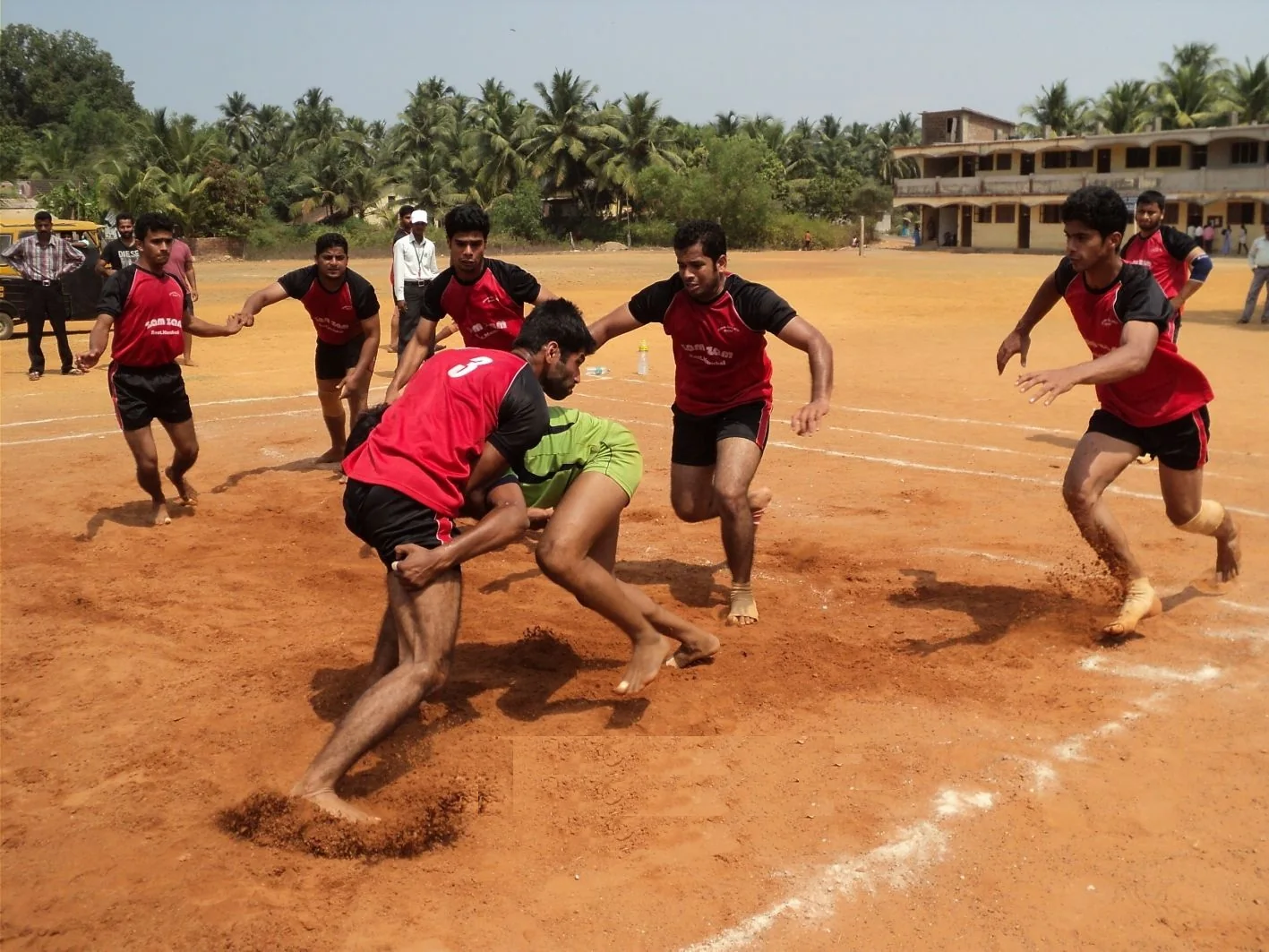
Seven players a side, on a mat divided in two. The teams take turns sending a raider across the midline, and the raider must chant the name of the game in one continuous breath while trying to touch opponents and get back over the line. The defending seven work as a chain to hold him on their half. Every attack is therefore both an attacking and a defensive play at once, which is what gives the sport its scoring rhythm and its market depth.
- Match length: 40 minutes (two halves of 20 minutes)
- Raid points: 1 point per defender tagged
- Tackle points: 1 point for stopping a raider
- Lona / all-out: 2 bonus points when one team gets all 7 opposing players out
- Bonus point: 1 point for the raider crossing the bonus line with 6+ defenders on court
- Super raid: 3 or more points taken in one attack by one player
- Raid clock: 30 seconds from crossing the midline to returning, or the raider is declared out
- Do-or-die raid: after two consecutive empty raids by a side, the third must produce a point or the raider is out
- Super tackle: 2 points to the defence when a raider is held with three or fewer defenders left on the mat
A lona adds 2 points on top of the seven already banked for putting the opposing side out, which is why the all-out swing is the single largest scoring event in the game and the reason total-points lines sit where they do. Infringements are called for stepping outside the court without completing a touch, for hand contact outside the legal zones, and for re-entering the mat after being declared out. None of them carry a points penalty in themselves; the sanction is the raider or defender being ruled out, and it is the resulting shortage of bodies that hands the opposition its next super tackle.
The domestic base underneath the league is what keeps the market liquid. The game demands a high cardiovascular load and full-body coordination, needs no equipment beyond a marked surface, and is played at school and district level in almost every Indian state — Haryana, Punjab, Uttar Pradesh and Maharashtra supply the bulk of the professional rosters between them. Franchise scouting runs through those district tournaments, and a raider can arrive in the league completely unknown and reprice a team inside a fortnight.